From the Battlefield to Their Final Resting Place
In April 2027, Australians and Papua New Guineans will commemorate the 85th anniversary of the Kokoda campaign.
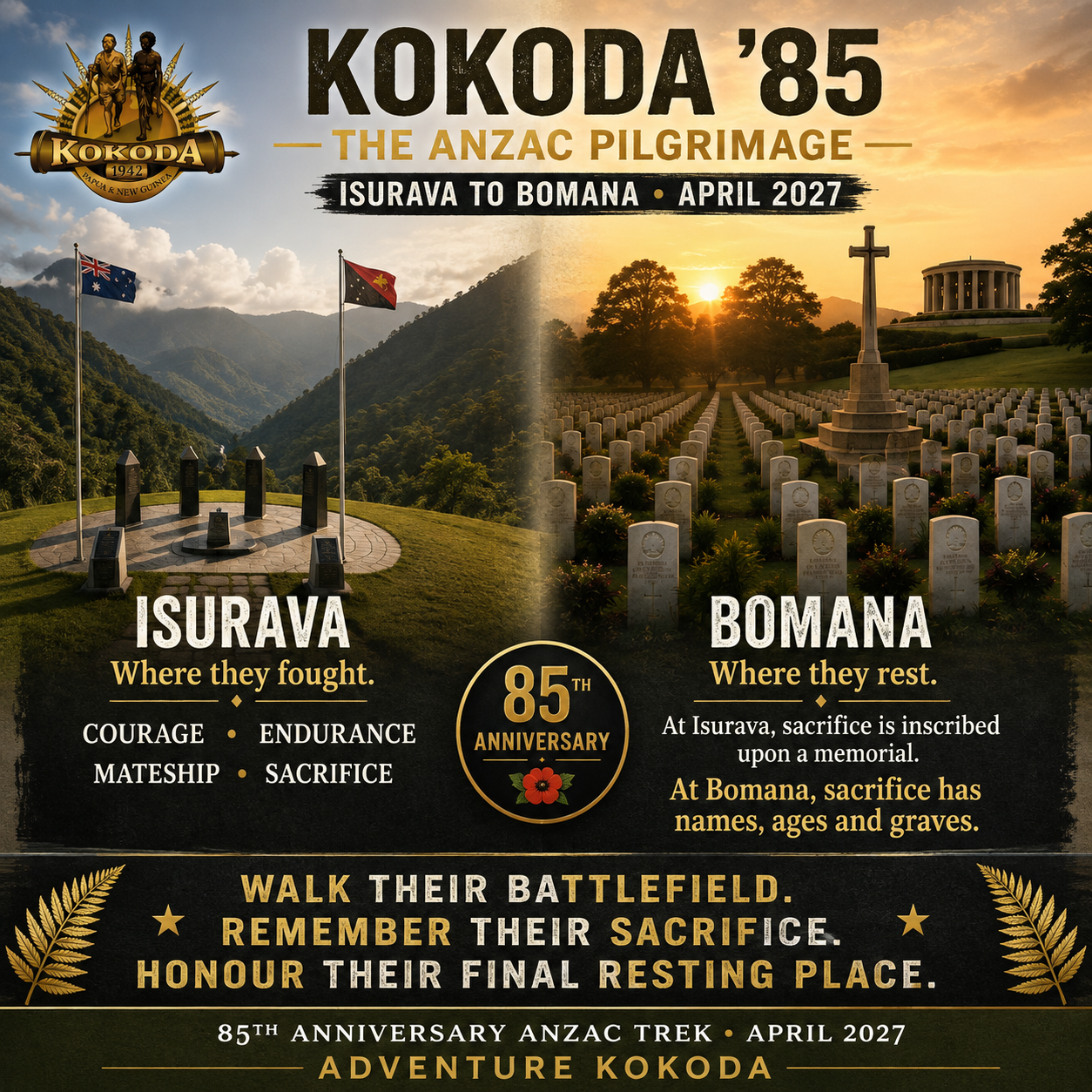
For Australians who choose to mark this anniversary by trekking accross the Kokoda Trail, there are two places of profound commemorative significance: the Isurava Memorial, high in the Owen Stanley Ranges, and Bomana War Cemetery, outside Port Moresby.
Both are sacred to the memory of the campaign.
But they are sacred for different reasons.
Isurava is where we remember what they did.
Bomana is where we confront what it cost.
Understanding that distinction is fundamental to the meaning of a Kokoda pilgrimage—and particularly important as we approach the 85th anniversary od tghe Kokoda campaign.
The most appropriate way to honour both places is not to choose between them.
It is to make them part of the same pilgrimage.
Isurava: Where the Story Comes Alive
Isurava is one of the most evocative places on the Kokoda Trail.
Here, in August 1942, young Australian soldiers fought desperately against an experienced Japanese force advancing towards Port Moresby.
It was here that Private Bruce Kingsbury performed the action for which he was posthumously awarded the Victoria Cross.
Today, the magnificent Isurava Memorial overlooks the battlefield.
Its four granite pillars bear four words:
- COURAGE
- ENDURANCE
- MATESHIP
- SACRIFICE
They have come to represent qualities Australians associate not merely with the Battle of Isurava, but with the entire Kokoda campaign.
For a pilgrim, however, Isurava is more than a memorial.
You cannot arrive there by coach, walk across a car park, take a photograph and leave.
You have trekked through the mountains to reach it.
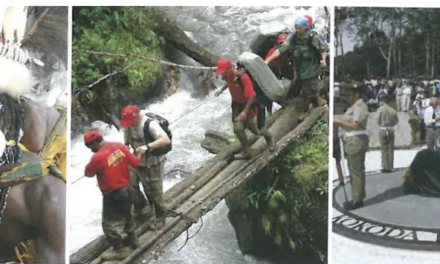
You have experienced something of the heat, rain, mud, steep ridges and exhausting descents that shaped the campaign.
You have crossed creeks and rivers and passed through villages whose forebears supported Australian soldiers during their darkest days.
Nothing experienced by a modern trekker can be compared with the privation, fear, exhaustion and violence endured by the soldiers of 1942.
But walking the ground provides something no book, documentary or museum can provide.
It provides context.
At Isurava, history is no longer represented simply by lines on a map.
The mountains are around you.
The battlefield is beneath your feet.
And the story of Kokoda begins to assume a human dimension.
That is why Isurava is such an appropriate place for historical interpretation, remembrance and quiet reflection.
For an 85th anniversary pilgrimage, a commemorative service there in the days preceding Anzac Day would be both appropriate and deeply moving.
But the pilgrimage should not end there.
From SACRIFICE to the Cross of Sacrifice
There is a powerful symbolic connection between Isurava and Bomana.
One of the four words carved into the Isurava Memorial is:
- SACRIFICE.
Several days later, after completing the Kokoda Trail and returning to Port Moresby, the pilgrim encounters another representation of that same word.
Standing among the graves at Bomana is the Cross of Sacrifice.
At Isurava, sacrifice is expressed as an ideal.
At Bomana, we see its consequence.
At Isurava, sacrifice is inscribed upon a memorial.
At Bomana, sacrifice has names, ages and graves.
That is why these two places should not compete for the attention of the Anzac pilgrim.
They complement each other.
Bomana: Where They Rest
Bomana War Cemetery has a fundamentally different significance from Isurava.
It is not principally a battlefield memorial.
It is a cemetery.
Its ordered rows of polished headstones mark the final resting places of thousands of Commonwealth servicemen who died during the war in Papua and New Guinea, including men who died during the Kokoda campaign.
Many were extraordinarily young.
Their military service ended in the mountains, jungles, swamps and battlefields of Papua.
Their final resting place is Bomana.
The cemetery itself has been designed around powerful symbols of remembrance.
The Cross of Sacrifice rises above the graves.
The Stone of Remembrance stands among them.
And the Port Moresby Memorial to the Missing records those who have no known grave.
The names of battlefields on which men died are carved above its pillars, while a topographical map indicates the location of those battlefields.
For the Kokoda pilgrim, these are not merely architectural features.
By the time they arrive at Bomana, names such as Isurava are no longer simply names on a memorial.
They have walked the ground.
They have climbed the ridges.
They have stood on the battlefields.
They have heard the stories.
And now they stand among the dead.
For Those Who Have No Known Grave
Not every soldier has a headstone at which a pilgrim can pause.
The Memorial to the Missing reminds us that some never received even the dignity of a known grave.
Their names remain.
That adds another dimension to the Kokoda pilgrimage.
We stand beside the graves of those who were recovered and buried.
And for those who have no known grave, we stand before their names.
The great military campaign described in histories and commemorated on monuments is suddenly reduced to its most fundamental unit:
- one man;
- one family;
- one loss.
Behind every headstone was a son, brother, husband, father or mate.
Behind every name on the Memorial to the Missing was a family that waited for somebody who would never return.
That is the human cost represented by Bomana.
Why Dawn?
There is another reason Bomana has particular significance on Anzac Day.
The Dawn Service itself has its origins in military tradition.
Before first light, soldiers occupying defensive positions would be awake, alert and manning their weapons because dawn was regarded as one of the most dangerous periods for an attack.
This routine became known as “stand-to.”
The tradition of gathering before sunrise on Anzac Day therefore carries an echo of the routines once familiar to the soldiers we commemorate.
At Bomana, that connection is particularly poignant.
Before dawn, people gather quietly among the graves.
The cemetery is still largely enveloped in darkness.
Then the first light begins to reveal seemingly endless rows of headstones.
The silence, the graves, the Cross of Sacrifice and the coming of dawn combine to create an atmosphere that cannot be manufactured.
The ceremony is no longer taking place merely at a memorial.
It is taking place among the men being remembered.
Isurava and Bomana: Two Sacred Places, Two Different Purposes
Some Kokoda trekking itineraries are designed so trekkers arrive at Isurava for a Dawn Service on Anzac Day.
The motivation is understandable.
Few places could provide a more dramatic or emotional setting.
And those who gather there undoubtedly do so with genuine reverence.
But there is an important distinction between a commemorative service on a battlefield and the official Anzac Dawn Service conducted at the cemetery where so many of the fallen lie.
The distinction is not about determining which location is more sacred.
Both are sacred.
It is about understanding their different commemorative purposes.
Isurava tells us how they fought.
Bomana reminds us of the price they paid.
At Isurava we stand where courage, endurance, mateship and sacrifice were demonstrated.
At Bomana we stand among men for whom sacrifice was absolute.
The appropriate response is therefore not Isurava or Bomana.
It is:
Isurava and Bomana.
Our Kokoda 85 Anzac Pilgrimage
Imagine an 85th anniversary itinerary designed around the meaning of pilgrimage rather than simply arranging a trek around a date on the calendar.
Trekkers would cross the Kokoda Trail and reach Isurava several days before Anzac Day.
There, overlooking the battlefield, they would participate in a commemorative service.
They would hear the story of the battle.
They would remember Kingsbury and his comrades.
They would reflect upon the four words carved into the memorial:
Courage. Endurance. Mateship. Sacrifice.
They would then continue their journey to Kokoda.
Their trek would be complete.
But their pilgrimage would not.
They would return to Port Moresby and, before dawn on 25 April 2027, travel to Bomana War Cemetery.
There they would join Australians, Papua New Guineans, servicemen and women, veterans, descendants and fellow pilgrims for the official Anzac Dawn Service.
Imagine what those moments would mean after walking Kokoda.
The names of places mentioned during the service would be places they had just walked through.
The stories would be about men whose battlefields they had just stood upon.
And surrounding them would be the headstones of men whose journey had ended in Papua 85 years earlier.
The pilgrim would have travelled from their battlefields to their final resting place.
That is something fundamentally different from adventure tourism.
That is pilgrimage.
Completing the Journey
More than a decade ago, in describing our 2014 Anzac Trek, I wrote:
“Linking Kokoda with the official ANZAC Dawn Service at Bomana War Cemetery is the ultimate Kokoda experience.”
For the 85th anniversary, I would go further.
It is not simply the ultimate Kokoda experience.
It is the completion of the Kokoda pilgrimage.
The Kokoda Trail provides the journey.
The battlefields provide the history.
Isurava provides the opportunity to understand their courage.
Bomana reveals the cost.
And Anzac Day provides the moment when the individual pilgrim joins the nation in remembrance.
The 85th anniversary therefore presents an opportunity to restore the idea of pilgrimage to the Kokoda experience.
Tour operators should consider itineraries which allow trekkers to commemorate the campaign at Isurava in the days preceding Anzac Day, complete their journey across the Trail, and return to Port Moresby in time to attend the official Dawn Service at Bomana War Cemetery.
Such an itinerary would not diminish Isurava.
It would elevate its proper place in the pilgrimage.
Nor would Bomana replace the emotional connection developed on the Trail.
It would complete it.
KOKODA 85 — THE ANZAC PILGRIMAGE
Walk in their footsteps.
Stand on their battlefield.
Learn their story.
Remember their sacrifice.
Stand beside their graves.
Remember those who have no known grave.
And at dawn on Anzac Day, honour them together.
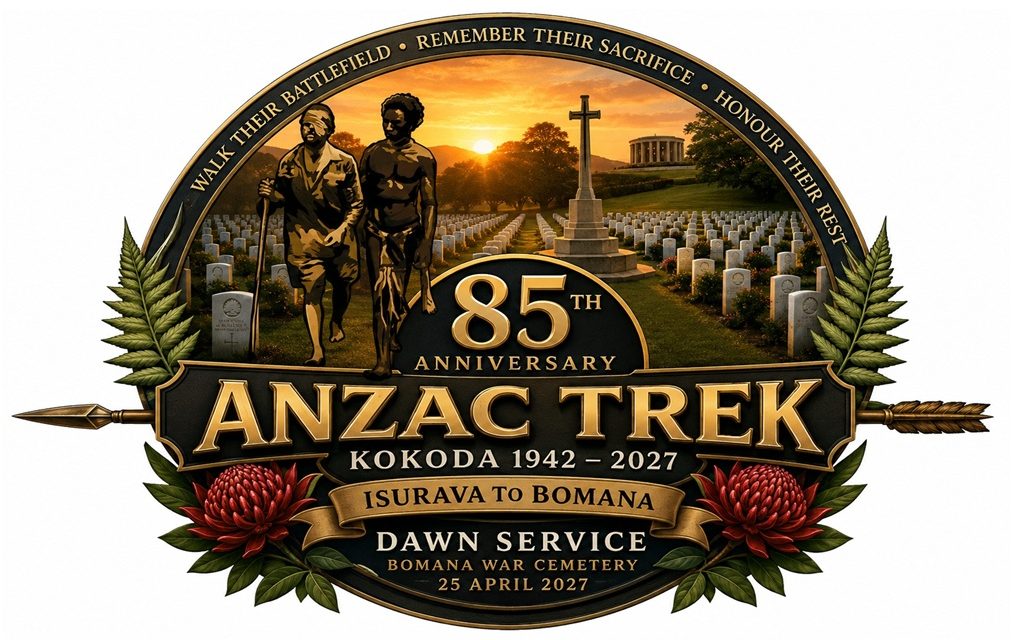
ISURAVA TO BOMANA
KOKODA 1942–2027
Walk their battlefield. Remember their sacrifice. Honour their final resting place.